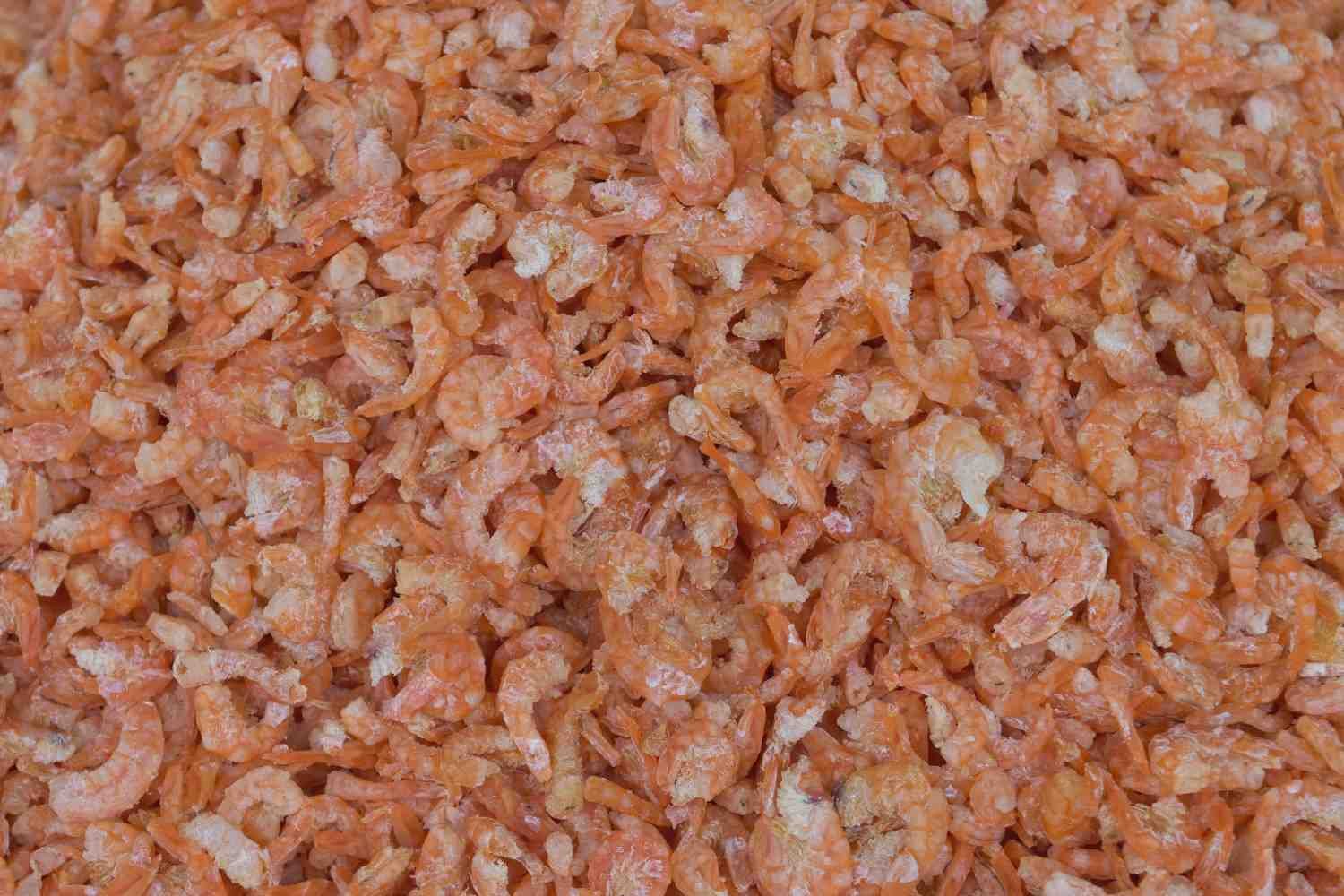
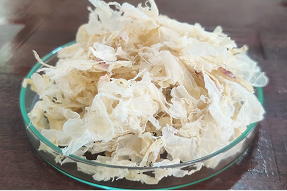
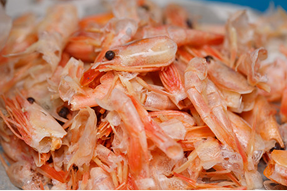
In the seafood industry, shrimp heads and shells are rich in chitin, a key precursor for chitosan production. One of the most effective methods to handle and process this material is through crushing and dewatering, which significantly reduces the moisture content and prepares the biomass for downstream processing like hydrolysis, drying, and chemical treatment.
The raw shrimp heads and shells are first introduced into a rotary crusher, a high-speed mechanical unit that breaks down the tough exoskeletons into a free-flowing, homogenous slurry. This crushing process uses a high-speed rotating mechanism, and sizing is achieved using a mesh placed at the outlet. The mesh ensures a uniform output and prevents large, unprocessed particles from passing through. The unit functions similarly to a mini hammer mill but is specifically engineered for wet, fibrous materials.
This crushing step plays a critical role in breaking the internal structure and fiber matrix, thereby making the material more manageable and drastically improving the efficiency of the subsequent dewatering stage.
Once crushed, the shrimp slurry is fed into a dewatering screw press, where the internal pressure gradually separates the free and bound moisture from the solids. The crushed structure allows the screw press to extract liquid more effectively—producing what is often described by clients as a “strawberry milkshake”-like output. This liquid contains water-soluble proteins and extractives, while the remaining semi-solid cake is retained for further processing.
Since the crushing has already disrupted the tough outer layers and internal fiber, the press operates at higher efficiency, achieving better volume reduction and preparing the biomass for drying or hydrolysis.
In this process design,
hydrolysis is performed after dewatering, as opposed to pre-treatment with heat or chemicals. This staged approach has benefits:
- Better separation of solids and liquids before chemical intervention.
- Reduced volume for hydrolysis tanks and lower chemical usage.
- Improved handling and drying of the semi-dry cake post-dewatering.
The pressed cake is typically dried and pulverized into a fine powder before undergoing
chemical extraction and deacetylation, converting chitin to chitosan—a compound with wide industrial, agricultural, and biomedical uses.
This combined crushing and dewatering approach offers an effective and scalable method to process raw shrimp heads and shells for chitosan production. It reduces disposal volume, improves liquid recovery, and lays the foundation for more controlled and cost-effective downstream operations. As seafood processors look for value-added applications for their waste, this solution offers both environmental and economic return on investment.